Pest Guide
Wasp, Hornet & Yellowjacket Control
A single nest under an eave or in a wall void can turn a backyard unusable by late summer. Removal is not a DIY job we'd recommend once a nest is established.
A single nest under an eave or in a wall void can turn a backyard unusable by late summer. Removal is not a DIY job we'd recommend once a nest is established.
Paper wasps build open, umbrella-shaped nests, often under eaves or deck railings, and are usually the least aggressive of the group unless the nest itself is disturbed. Yellowjackets nest in the ground or in wall voids, are more aggressive, and are the most common cause of late-summer sting incidents. Bald-faced hornets build large, enclosed paper nests, often high in a tree.
Honeybees are a different situation entirely — they're a protected pollinator in many cases, and a colony found in a wall or tree is often better handled by a local beekeeper than an extermination service, if the situation allows for it.
Beyond the pain of a sting, a meaningful share of the population has an allergic reaction ranging from significant swelling to anaphylaxis, which makes an established nest near a doorway, patio, or play area a real safety concern, not just an inconvenience.
Yellowjackets in particular can sting repeatedly and become defensive of a nest that's been disturbed, which is exactly why we don't recommend treating an active nest yourself once it's been identified.
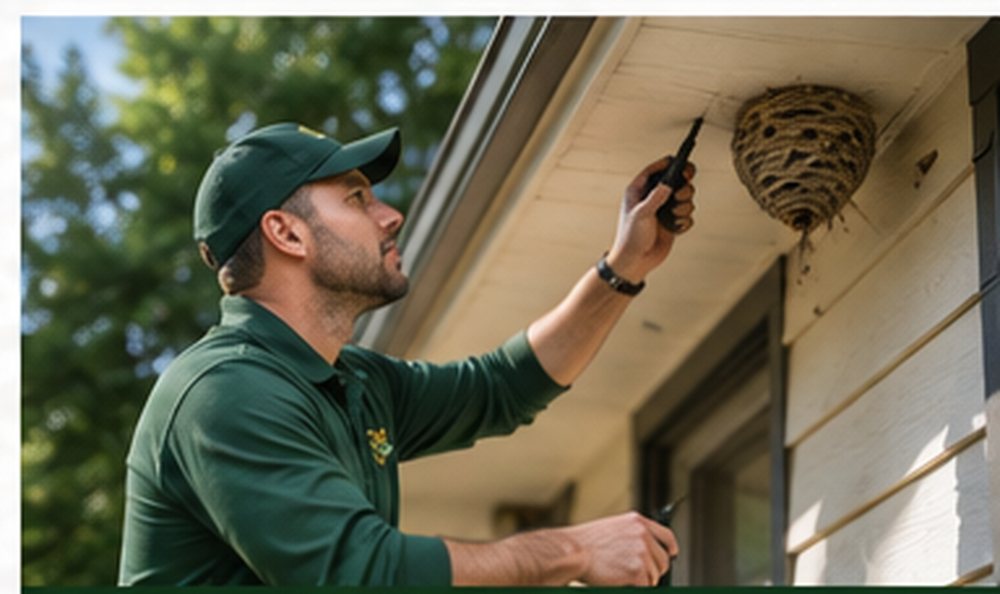
We identify the species and nest location first, since a ground-nesting yellowjacket colony, an enclosed hornet nest, and an open paper wasp nest are treated differently. Treatment is timed and approached to minimize the defensive response from an established colony.
Where honeybees are involved, we'll talk through whether relocation by a local beekeeper is a realistic option before defaulting to extermination.
This pest is covered under our Home Protection Plan.
Free inspection, no pressure — a real person calls back, usually same day.
We'd recommend against it once a nest is established — yellowjackets and hornets in particular can become defensive and sting repeatedly when disturbed, and it's easy to underestimate a nest's size from the outside.
Honeybees are worth handling differently when possible — we'll talk through whether relocation by a local beekeeper is realistic for the situation before treating it as a standard removal.
Colonies grow through the season and peak in size by late summer, which is when nests are largest and most active — exactly when most calls come in.