Bed bugs don't respond to the same quarterly approach as general household pests. This plan is built around a focused inspection and a treatment sequence designed to confirm the infestation is actually gone, not just knocked back.
Bed bugs need a different plan than the rest of our general pest coverage, since a single treatment rarely resolves an active infestation on its own. This plan is built around an inspection to confirm activity and map affected rooms, followed by a treatment sequence and a scheduled follow-up to verify the infestation is actually cleared.
Because bed bugs can hitchhike back in from travel, a used piece of furniture, or a neighboring unit, we treat this as a process with a defined endpoint rather than a single spray-and-done visit.
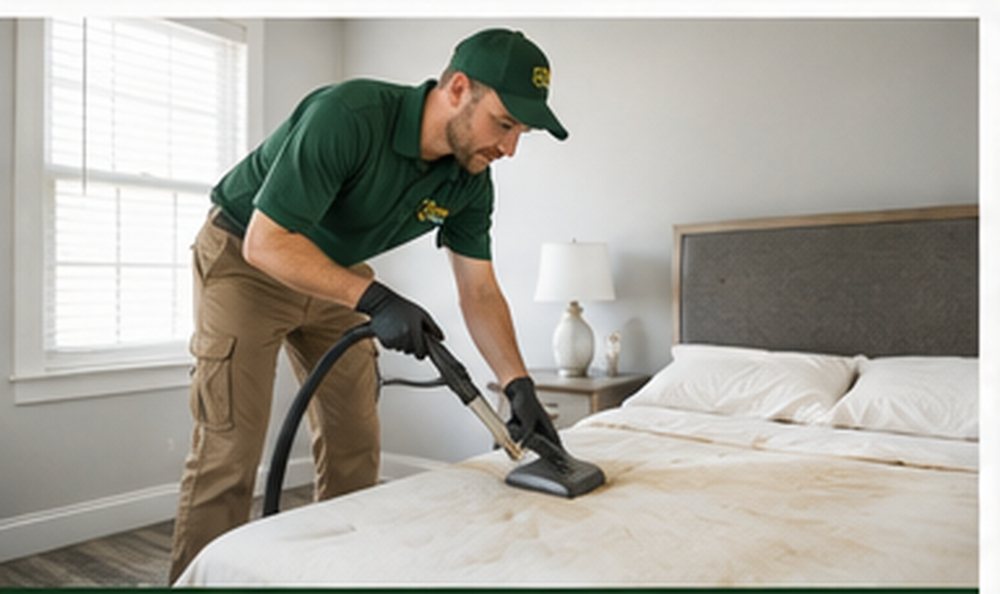
A technician inspects the mattress, box spring, bed frame, and nearby furniture to confirm activity and map which rooms are actually affected — bed bugs don't always stay confined to the bedroom.
Affected areas are treated based on what the inspection found, with guidance on preparation beforehand so the treatment can actually reach where bed bugs are hiding.
A scheduled return visit checks for any remaining activity. Bed bugs are treated as resolved only after that follow-up shows no signs of activity, not after the first visit alone.
If activity is still present at the follow-up visit, we continue treatment until it's resolved. Bed bugs are one of the few pests where we build the return visit into the plan from the start, rather than treating it as an exception.
Free inspection, no pressure — a real person calls back, usually same day.
Small reddish-brown insects, dark spotting on mattress seams, or unexplained bites in a line or cluster are common signs — but a lot of things get mistaken for bed bugs. A technician can confirm it during the inspection.
It depends on how established the infestation is when we start. The plan includes an inspection, treatment, and a follow-up visit built in from the beginning, and we'll be upfront if a situation looks like it needs more than that.
Usually not — a mattress encasement is often enough. We'll tell you specifically what needs to happen based on what the inspection finds, rather than a blanket answer.
They can, usually by hitchhiking back in from travel or secondhand furniture rather than from treatment failing. The follow-up visit is there to catch anything that wasn't fully resolved the first time.